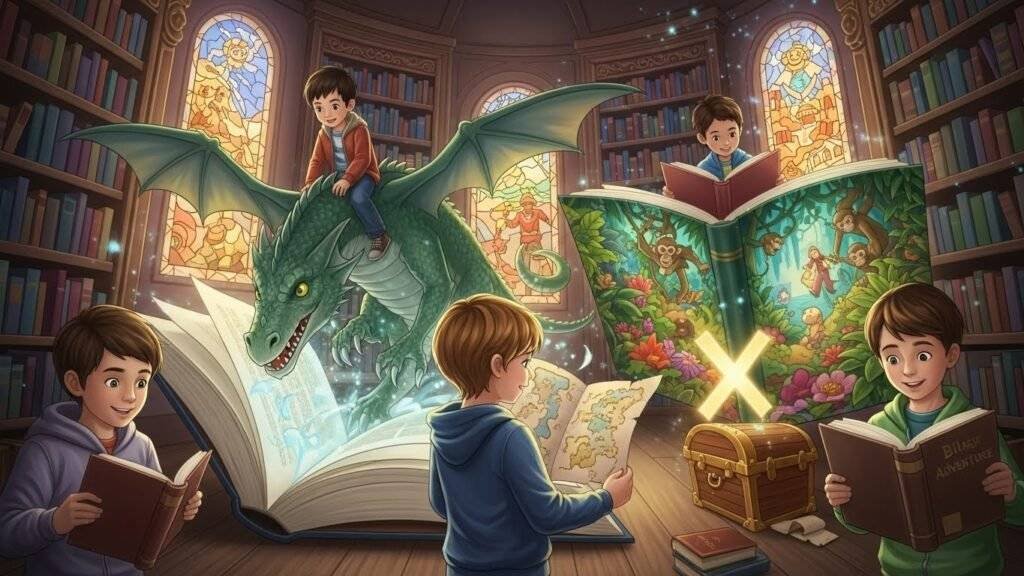
Every child dreams of thrilling quests, hidden treasures, and brave heroes. Great adventure books have the power to take young readers beyond the limits of their own worlds, be they fanciful or real. Such books not only engage the readers, but also develop in them qualities such as curiosity, resilience, and imagination.
Children’s adventure books with brave feats, mystery solving, and conquering of fears empower children to perceive the world as an infinite source of opportunities. On top of all this, children receive valuable lessons on critical thinking and adopt brave behavior plus become confident of their abilities by immersing themselves in such stories.
The Power of Adventure Books for Kids in Shaping Imagination
Once the kids get hold of adventurous literature for young readers, they start to fantasize about themselves as being adventurous, taking the role of an explorer, detective, or inventor. Their creativity just keeps being nourished by each and every page.
The authors of adventure books for kids aim to give the readers not only pure fantasies, but also learning of good and real social values which include the above mentioned virtues: teamwork, bravery, and empathy. Kids are taught through the characters that tough times can lead to growth and that they can find courage in their fears if they hold on to perseverance. Imagination is the most reliable of their guides.
Building Confidence and Curiosity Through Kids Adventure Books
The different trials shown in kids adventure books are very much like those small but significant challenges children face in their everyday lifestyles. Due to the fact that their preferred characters defeat their fears, find solutions to problems, and rise above difficulties, children will also be able to make a character in their own lives of bravery and independence.
Basically, through this fictional work, kids are taught the lesson that failures are inevitable in every important journey. For instance, when a protagonist tackles the challenge of climbing a mountain, or fighting against a dragon, readers are informed that the brave act is not the absence of fear, just going on despite it.
Emotional Growth Hidden Within the Pages of Children’s Adventure Books
Besides the excitement aspect, children’s adventure books serve as vehicles for emotional intelligence education as well. For instance, when kids read about friendship, loyalty, and loss, they start to understand complex emotions in a safe and relatable way.
By imagining the characters of our stories, kids develop the ability to put themselves in other’s shoes, that is, to feel what others feel and understand why. This emotional connection prepares them for life’s challenges in a more mature way.
Why Parents and Educators Love Adventure Books for Kids
Parents and teachers do not hesitate to suggest adventure books for kids as they are a perfect mix of fun and learning. These narratives provide references to history, science, and morals without giving the impression of a boring lesson.
For instance, a jungle themed adventure can bring knowledge about animals, location, and nature care while another story being set in space can deliver the themes of collaboration, invention, and bravery. The learning is subtle and happens as the story progresses.
Inspiring Lifelong Readers Through Kids Adventure Books
Gaining an early love for reading is one of the great factors that children will most probably retain as they get older. The kids’ adventure books are just the right tool to entice children, as they are first of all exciting and then, they are deep enough to draw the reader’s curiosity.
Many times the desire to find out the “what happens next” is seen as a factor that most probably will convince even those who dislike reading to continue going through the pages. In the long run, they come to view reading not as a task but a passion.
Modern Trends in Children’s Adventure Books
The next generation of children’s adventure books has changed alongside the new era values. Today’s narratives are better in terms of inclusiveness, diversification, and imagination. They have heroes of various origins, indicating that strength and smarts are not limited to a single gender or one specific race.
Besides these modern stories being fun, they also impart awareness about societal problems, suggest that everyone is equal and encourage children to be curious about the world. Kids, on the other hand, can take a trip into the realms based on different Earth’s cultures and learn that not only courage but also love are universal values that no country has a monopoly on.
Choosing the Right Adventure Books for Kids
When selecting adventure books for kids, consider age appropriate content and the kind of message the story conveys.
Here are a few quick tips:
- For younger readers (ages 5 to 8): Choose stories with simple plots and colorful illustrations that spark imagination.
- For middle graders (ages 9 to 12): Pick tales with deeper character development and moral lessons.
- For early teens: Look for complex worlds and themes that challenge their growing perspectives.
Each stage of development benefits from adventure tales tailored to their curiosity and understanding.
The Timeless Appeal of Kids Adventure Books
Children’s adventure books are still very much relevant despite the changes in the world. They serve as a reminder to the kids that courage, inquisitiveness, and love are virtues that are always fashionable.
These exalting brave qualities, a child after an adventurous reading will not only close a story but also, grasp the life lessons that shape their future. They become a new generation of thinkers, dreamers, and doers ready to take on the world.
FAQS
Why are children’s adventure books important for development?
Such books cultivate the child’s creative power, emotional sensitivity, and logical thinking abilities alongside entertaining them.
What age group benefits most from adventure books for kids?
Kids aged 5 to 13 are the primary beneficiaries as they are in the process of developing their imagination, curiosity, and emotional awareness.
How can parents encourage kids to read more adventure books?
One can introduce the kids to brief, thrilling tales and then talk about the adventures to keep the inquisitiveness going.